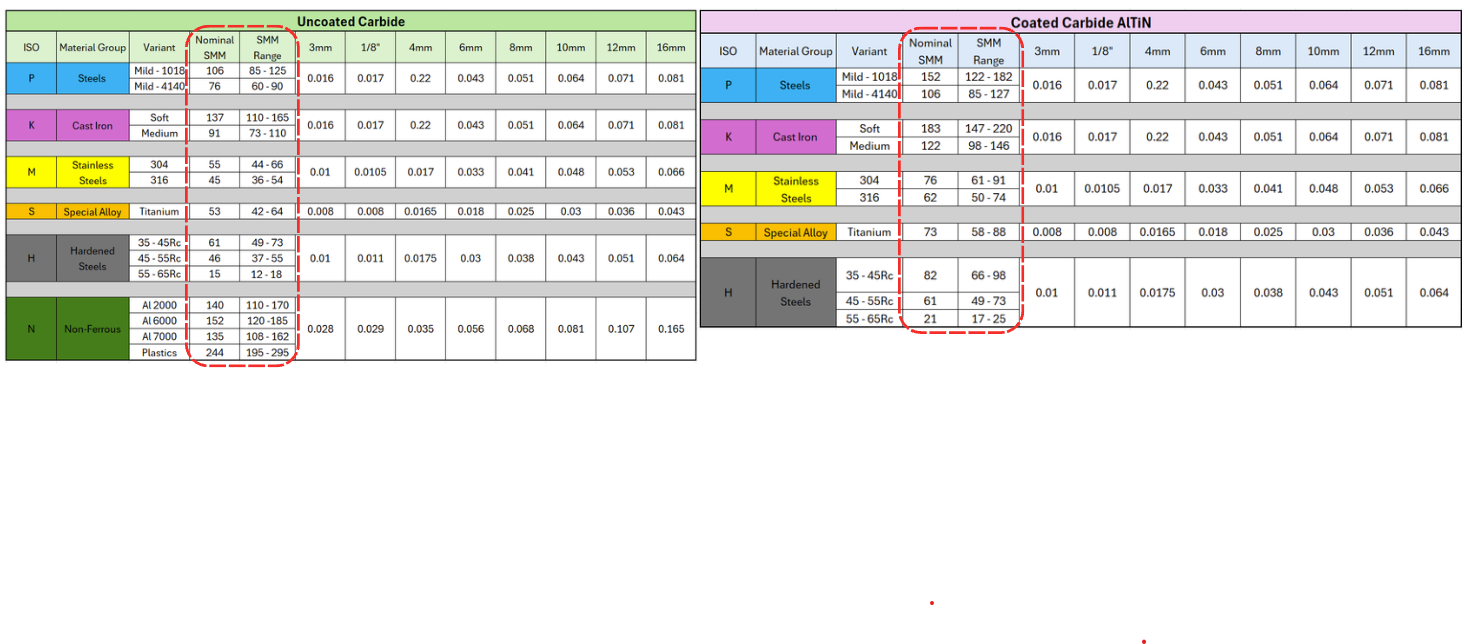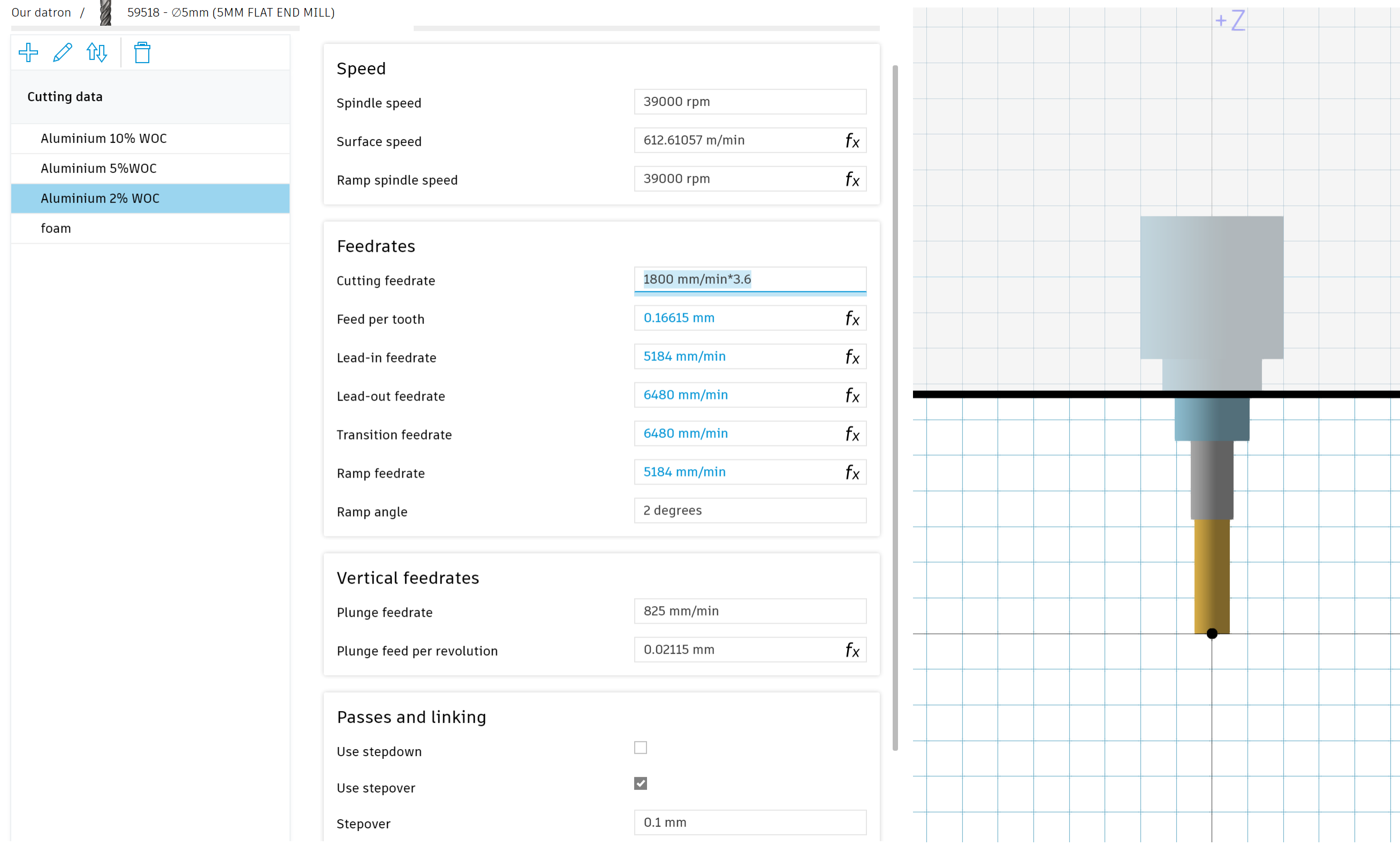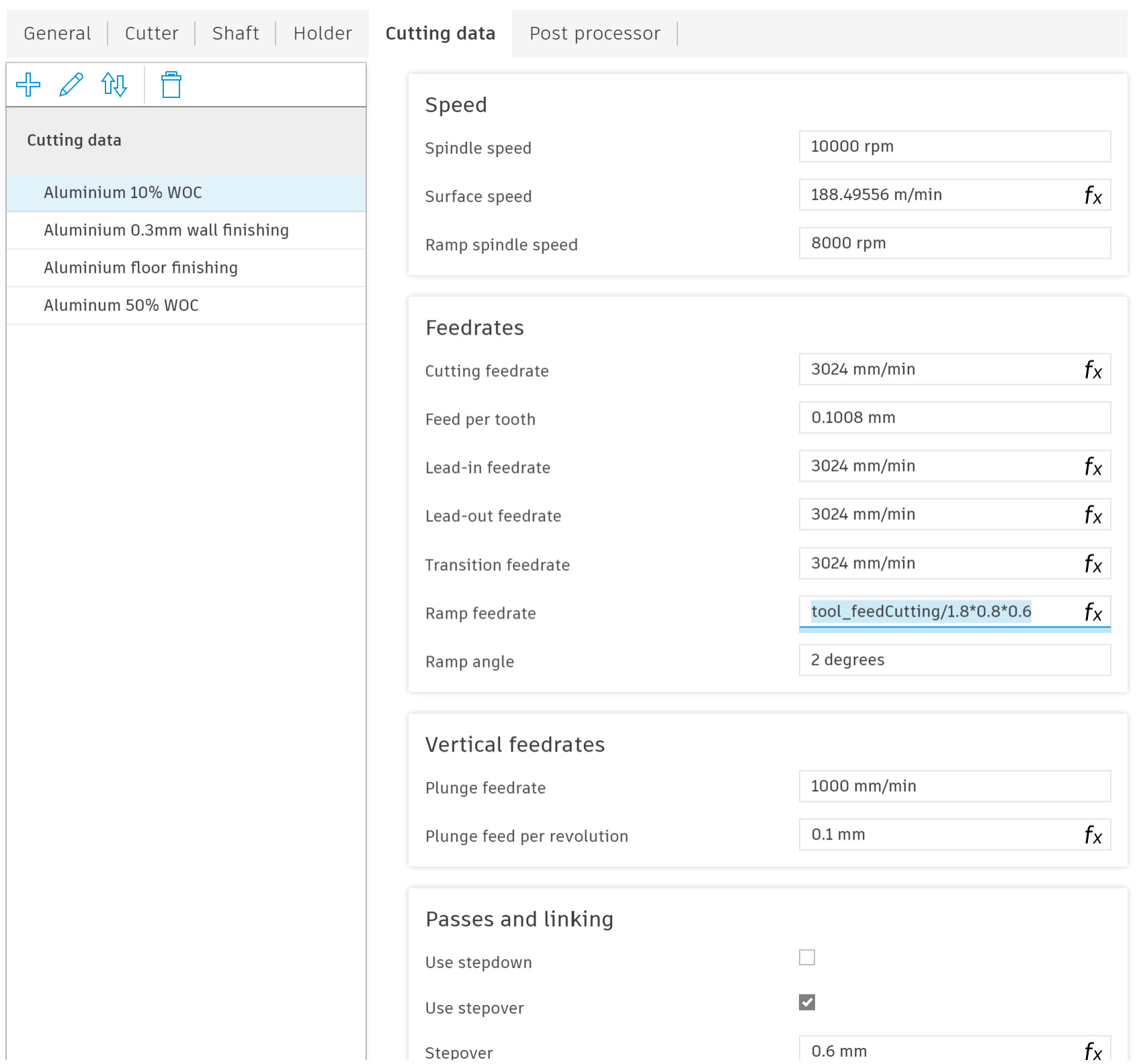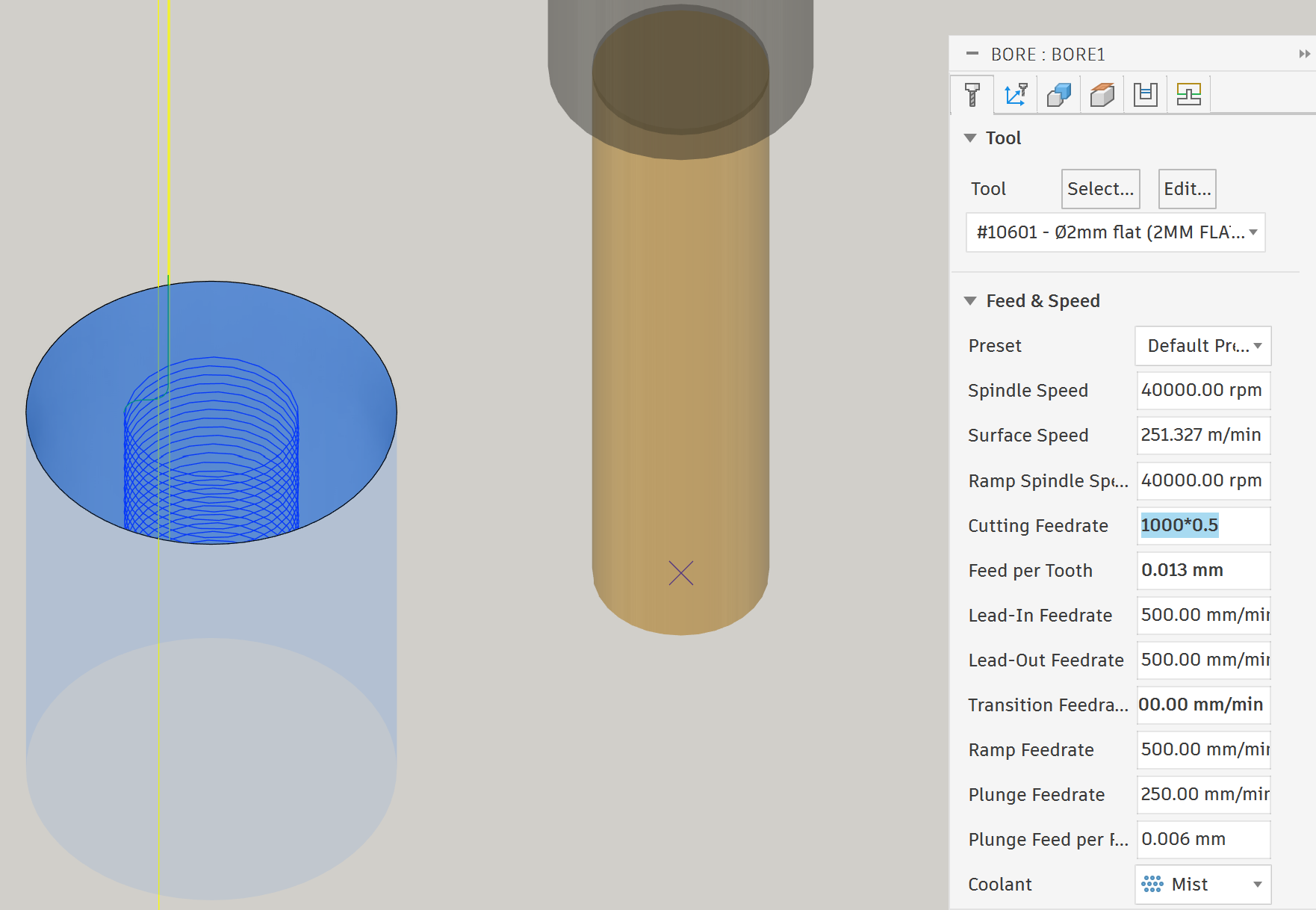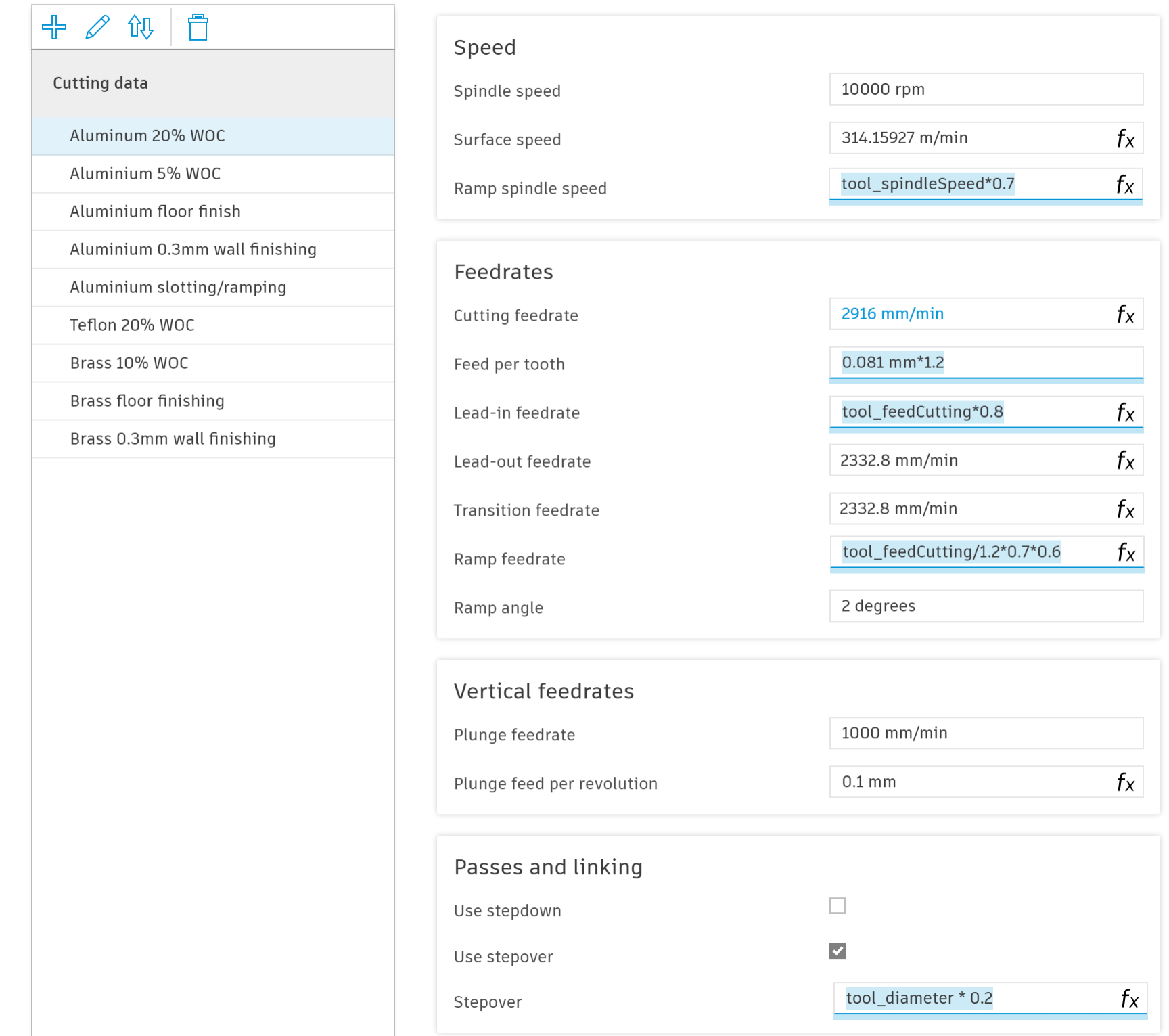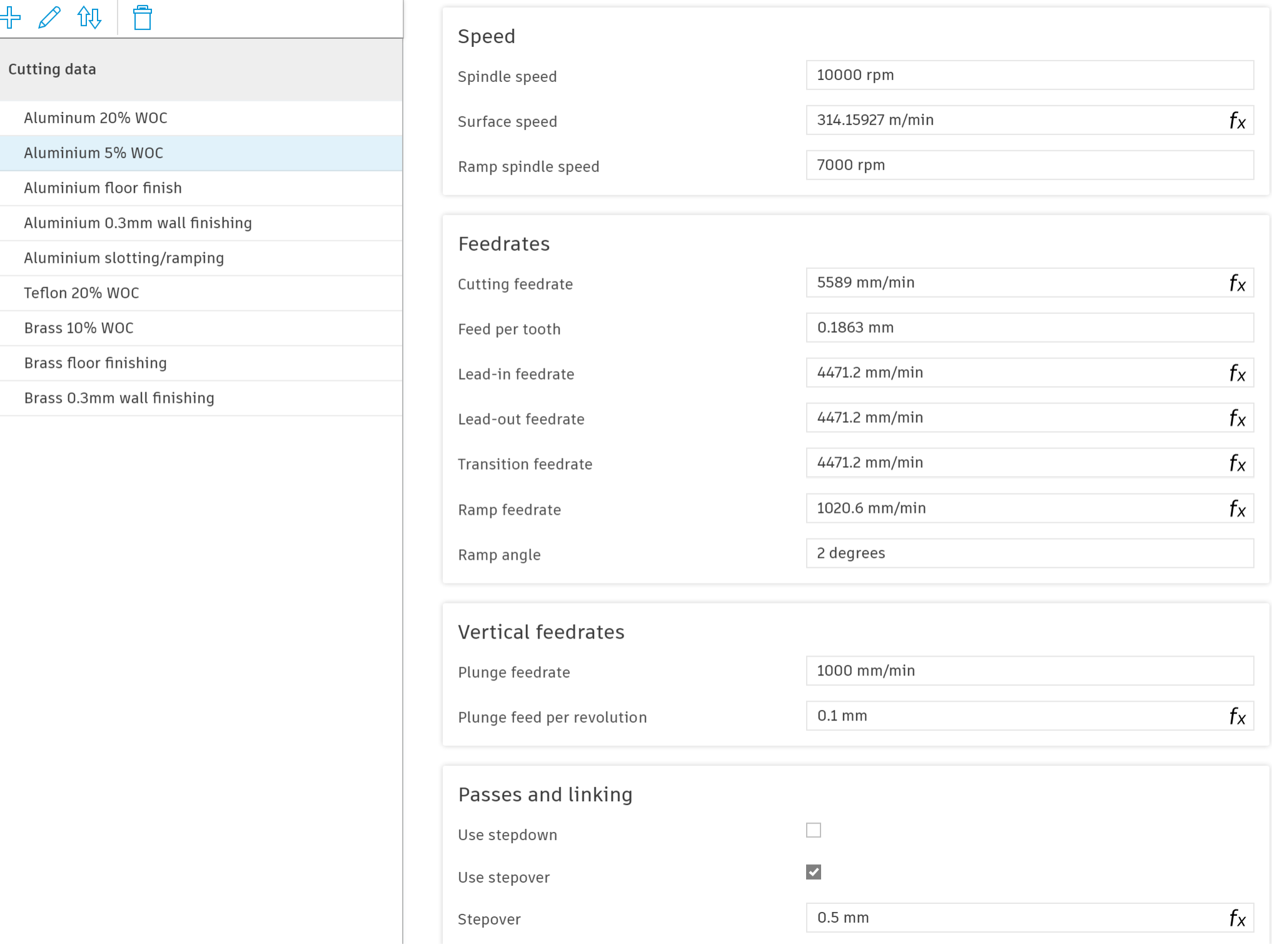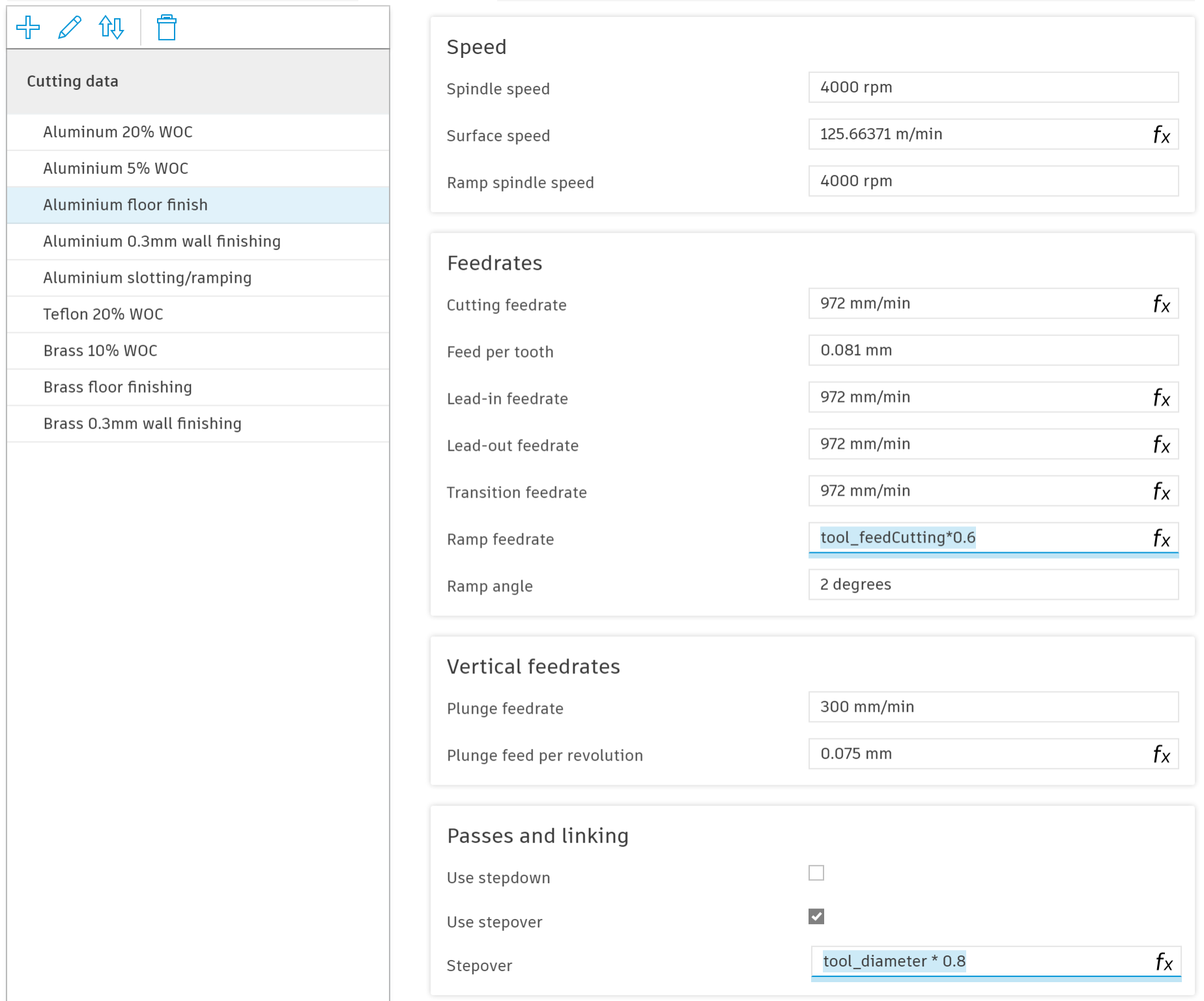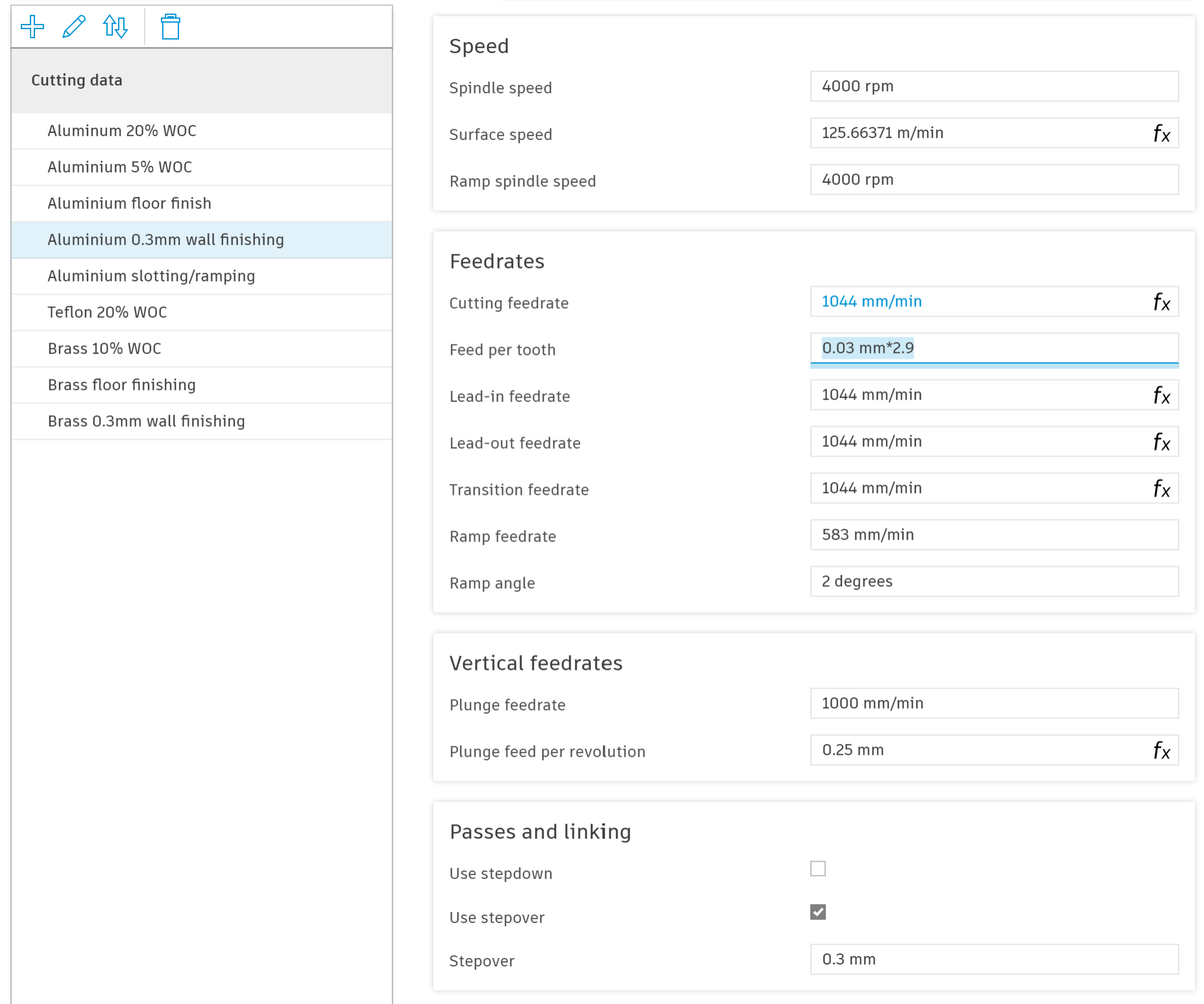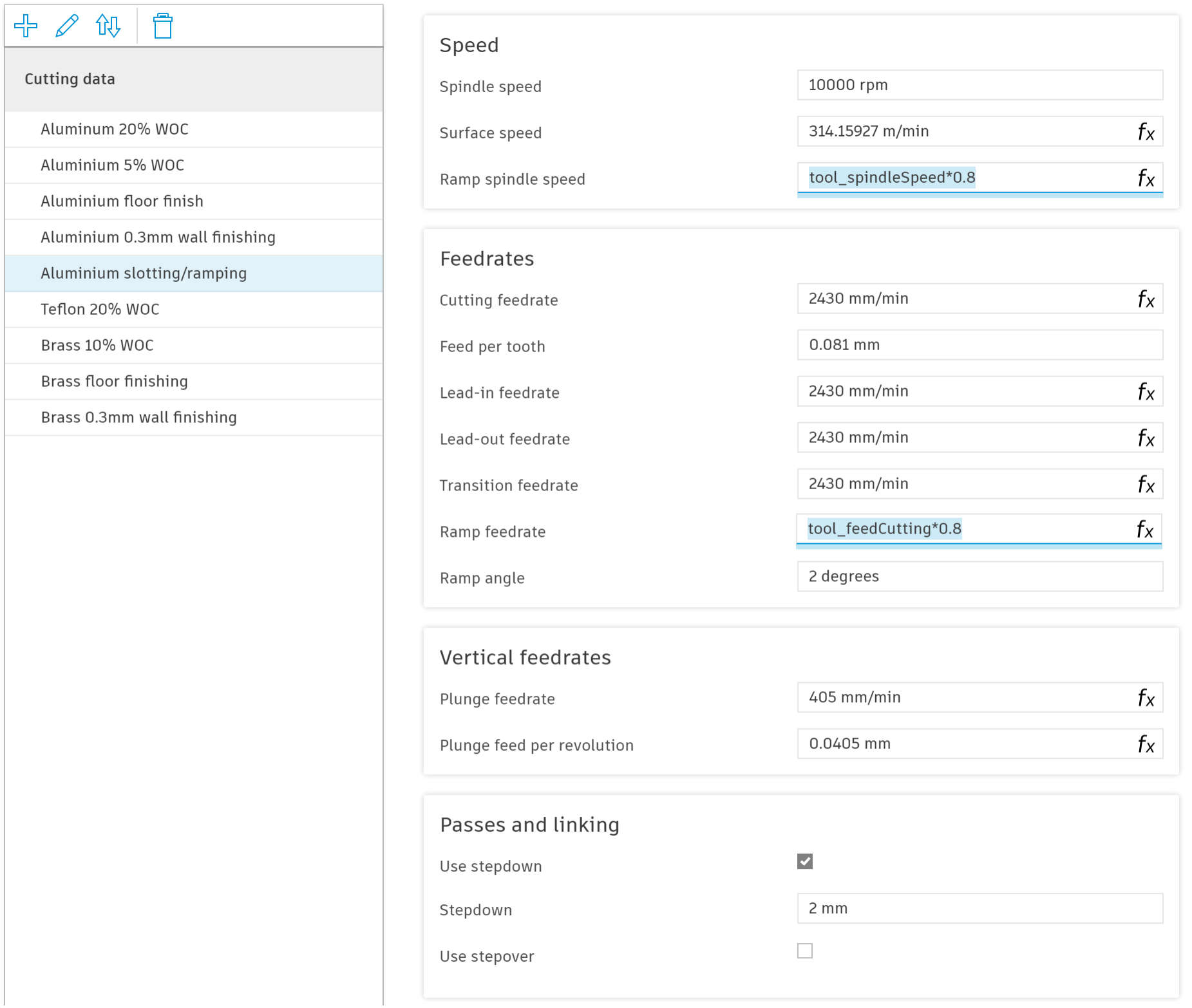
Surface speed is the velocity of the outside of the tool as it spins. We use the recommended surface speed for different materials to determine the RPM. It is related to RPM and tool diameter:
RPM = Surface speed / (Pi * Diameter)
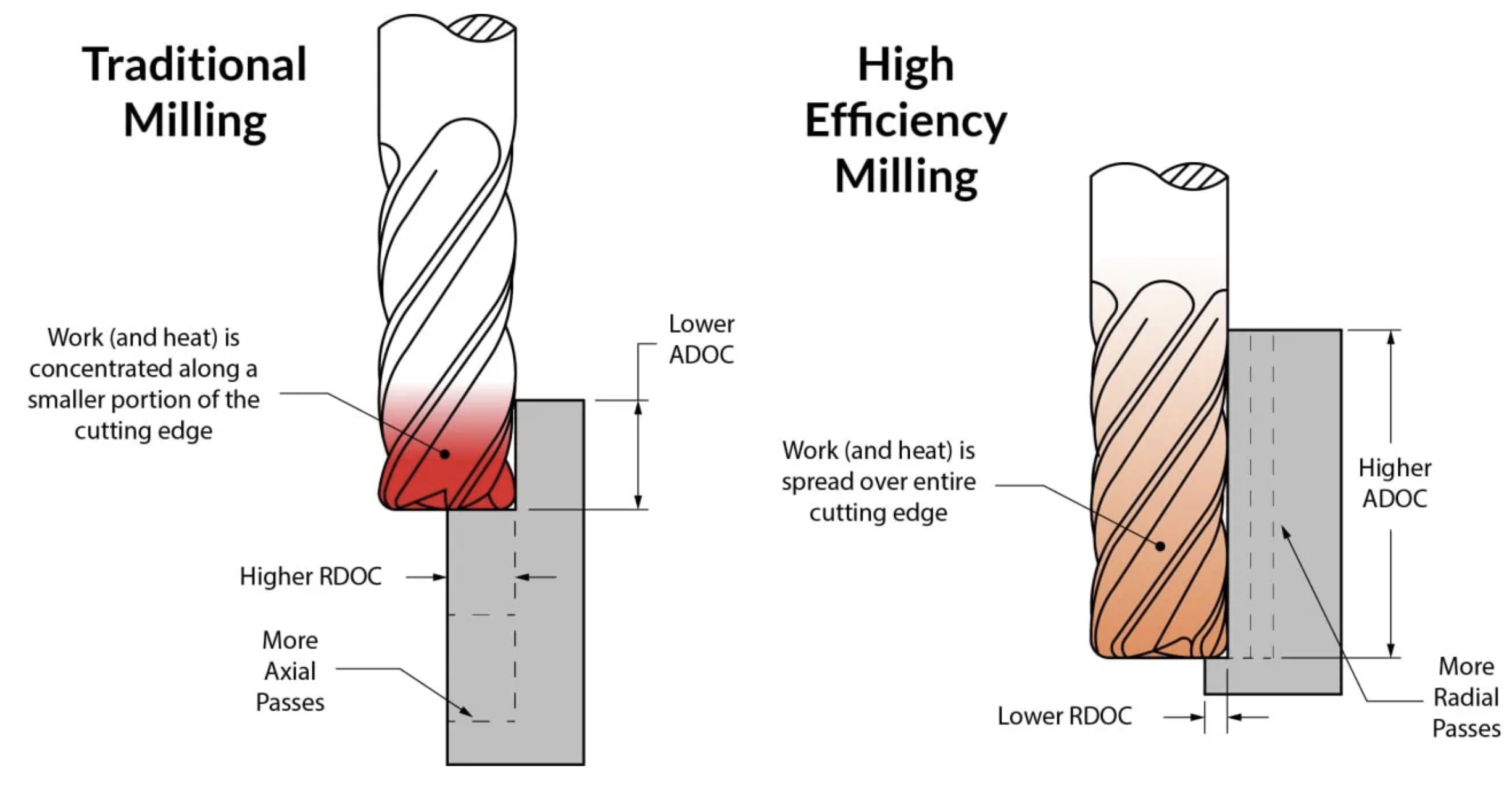
Surface speed is important because it affects the amount of heat produced during cutting. Harder materials require slower surface speed because they produce more heat when cut.
If the surface speed is too high excessive heat will be generated, the tool gets too hot and will reduce its hardness which can cause it to chip and break. If certain materials (plastic, aluminium...) get too hot they can melt or weld to the cutter, potentially causing a breakage.
High speed steel tools require low surface speed because it has low thermal stability (600C). Uncoated carbide can tolerate higher surface speeds and temperature (800C). Coatings are added to carbide to increase thermal tolerance (900C - 1100C) and decrease friction, allowing even faster surface speed. Coatings also have lots of other effects, and you need the correct coating for your material.
The benefit of high surface speed is faster cutting: if you double the RPM you can double the feed rate.
SFM (surface feet per minute) is imperial surface speed.
SMM (surface meters per minute) is metric surface speed.
To convert SFM to SMM, use this formula:
SMM = SFM * 0.3048